
Global ice loss increases at record rate
The rate at which ice is disappearing across the planet is speeding up, according to new research. And the findings also reveal that the Earth lost 28 trillion tons of ice between 1994 and 2017.

The rate at which ice is disappearing across the planet is speeding up, according to new research. And the findings also reveal that the Earth lost 28 trillion tons of ice between 1994 and 2017.

Earth’s global average surface temperature in 2020 tied with 2016 as the warmest year on record, according to an analysis by NASA.

To cope with environmental fluctuations, including climate change and global warming, animal species employ various adaptive strategies. Despite use of plastic physiological and behavioural responses, climate change is still likely to impact animal function.

While more progress is being made all the time in Artificial Intelligence, some scientists warn of the dangers of an uncontrollable superintelligent AI. Using theoretical calculations, a team of researchers shows that it would not be possible to control a superintelligent AI.

In the future, the Antarctic could become a greener place and be colonised by new species. At the same time, some species will likely disappear.

If available prime mover SI engine technologies are optimally matched to each other, more than 40 percent of the energy bound in the fuel can be used in real road transport. Synthetic fuels can lead to even higher efficiency and reduced emissions due to their better combustion properties.

With widespread, sustained declines in fertility, the world population will likely peak in 2064 at around 9.7 billion, and then decline to about 8.8 billion by 2100 — about 2 billion lower than some previous estimates, according to a study.

According to analysis, global warming accelerates the loss of biodiversity. Vice versa, measures to protect biodiversity may also mitigate the impacts of climate change.
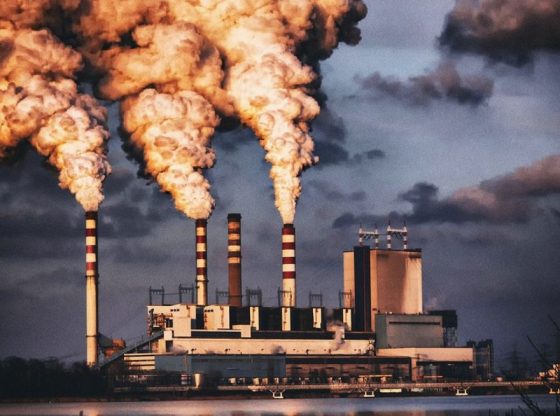
The anthropogenic warming of the planet will probably have a much greater impact on worldwide production and prosperity than has been quantified by previous model studies.

The growing use of nitrogen fertilizers in the production of food worldwide is increasing concentrations of nitrous oxide in the atmosphere. The emissions are putting reaching climate goals in jeopardy.