
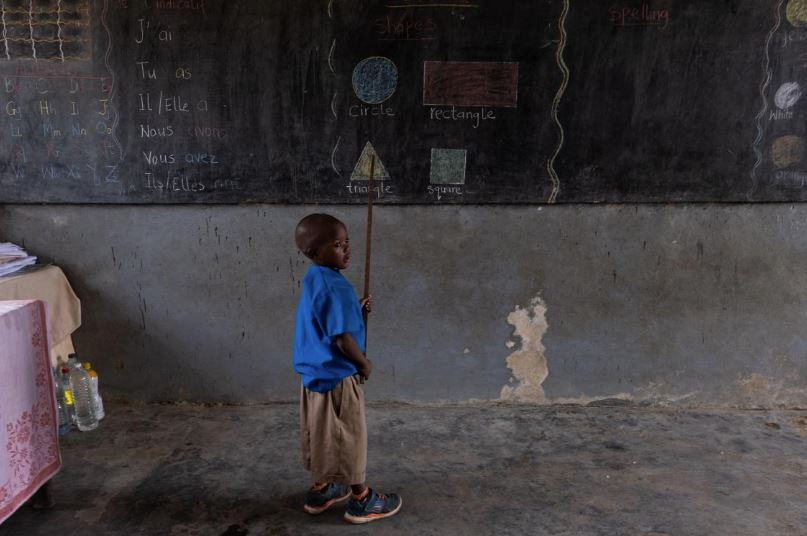
NEW YORK, August 27 (WNM) - More than 1.9 million children are forced out of school across west and central Africa due to rising violence and insecurity, putting them at higher risk of recruitment by armed groups, the UN’s children agency has warned.
UNICEF reports:
Thirty years after governments around the world adopted the Convention on the Rights of the Child, the right to an education is being violated in communities hit by conflict in West and Central Africa.
Right now, nearly two million children are being robbed of an education in the region due to violence and insecurity in and around their schools. In Burkina Faso, Cameroon, the Central African Republic, Chad, the Democratic Republic of the Congo, Mali, Niger and Nigeria, a surge in threats and attacks against students, teachers and schools – on education itself – is casting a foreboding shadow upon children, their families, their communities and society at large.
Now more than ever, governments must reaffirm their commitment to protecting education from attack and providing the resources needed to help their youngest citizens to keep learning. Now is the time for renewed efforts to make sure the potential of a generation of young people is not wasted.
What’s happening?
Many areas in West and Central Africa are witnessing increased hostility towards education by warring factions. More than one quarter of the 742 verified attacks on schools globally in 2018 took place in five countries across West and Central Africa.
How many children are affected?
The number of schools forced to close due to rising insecurity in conflict-affected areas of West and Central Africa tripled between the end of 2017 and June 2019. As of June 2019, 9,272 schools closed across eight countries in the region, affecting more than 1.91 million children and nearly 44,000 teachers.
Why is education under threat?
Particularly in the countries of the Central Sahel (Burkina Faso, Mali and Niger) and the Lake Chad Basin (Cameroon, Chad, Niger and Nigeria), ideological opposition to what is seen as Western-style education – especially for girls – is central to many of these disputes. As a result, school children, teachers, administrators and the education infrastructure are being deliberately targeted. At the same time, worsening insecurity and conflict, including the use of schools by armed forces and groups, further disrupts a child’s access to and quality of education.
UNICEF and partners call on governments, armed forces, other parties to conflict and the international community to take concerted action to stop attacks and threats against schools, students, teachers and other school personnel in West and Central Africa – and to support quality learning for every child in the region. To reach these goals:
States must protect education and endorse the Safe Schools Declaration, which calls for stopping attacks on schools, education facilities and personnel.
Teaching and learning must be designed to build peace and support girls’ education – including tackling gender-based stereotypes, preventing child marriage, combatting gender-based violence and discriminatory practices, and protecting pregnant girls’ right to education.
Authorities must build the capacity of education personnel through training in core knowledge and competencies, proven pedagogical methods and provision of psychosocial support.
All refugee, migrant and displaced children must be able to continue learning through access to quality education.
Parents and communities must be essential partners in ensuring access to quality education during and after emergencies. Donor governments must commit to multi-year, flexible funding to support education in emergencies and create linkages to longer-term education programming.