
BERLIN, September 30 (WNM) - Bill Li, director of the Hong Kong Office in Berlin, Germany, explains in an exclusive for The World News Monitor the vision for the future of the Greater Bay Area in China.
The World News Monitor: Are the Hong Kong protests affecting the investment climate in Hong Kong and could they endanger Hong Kong's privileged position - one country, two systems - in the long term?
Bill Li: Hong Kong's fundamentals as a free, open and dynamic city with a stable and robust financial system remain intact despite recent disruptions. We will continue to build on our unique advantages under "one country, two systems" - a framework that guarantees Hong Kong's own system of common law, economic policy, civic freedoms, property rights and much more. We place our trust and faith in the rule of law and in our capacity to reform, reposition and rebuild our city in the face of crisis. We are confident that Hong Kong will bounce back again.
- Which are the key elements of the Development Plan for the Greater Bay Area (GBA)?
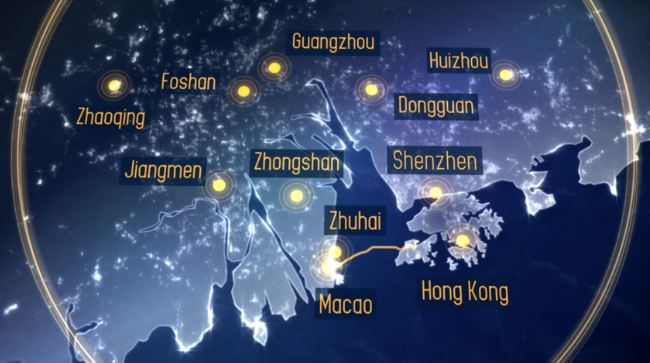
Bill Li: The objectives are to further deepen cooperation amongst the Guangdong Province, Hong Kong and Macao, fully leverage the composite advantages of the three places, facilitate in-depth integration within the region, and promote coordinated regional economic development.
The free flow of people, goods, capital and information is critical to the success of the Greater Bay Area. To ensure superior physical and administrative connectivity and people-to-people bonds, Hong Kong has already significantly enhanced infrastructural connectivity, thanks to last year’s opening of the Hong Kong-Zhuhai-Macao Bridge and the Hong Kong Section of the Guangzhou-Shenzhen-Hong Kong Express Rail Link. Both reduce travelling time considerably between Hong Kong and key Greater Bay Area centres.
Another element is to develop an international innovation and technology hub, a globally competitive modern industrial system, as well as a quality living circle embracing innovation, ecological conservation, culture and leisure.
- In particular, which role has Hong Kong inside the Greater Bay area?
Bill Li: The Outline Development Plan for the Greater Bay Area announced in February 2019 emphasises coordinated economic development, complementing the varying expertise of each of its 11 member cities. Hong Kong will lead the way in several key sectors, and will help building the GBA into the Silicon Valley of the East.
The aim is to consolidate and enhance Hong Kong’s status as an international financial, transportation and trade centre as well as an international aviation hub, strengthen its status as a global offshore Renminbi (RMB) business hub and its role as an international asset management centre and a risk management centre, promote the development of high-end and high value-added financial, commercial and trading, logistics and professional services, make great efforts to develop the innovation and technology industries, nurture emerging industries, establish itself as the centre for international legal and dispute resolution services in the Asia-Pacific region, and develop into an international metropolis with enhanced competitiveness.
The principle of “one country, two systems” under which the people of Hong Kong enjoys a high degree of autonomy empowers the city with unique advantages. Hong Kong is the most open and cosmopolitan city in the GBA. “One country, two systems” also enables Hong Kong’s adherence to common law. Rule of law and an independent judiciary have been critical to Hong Kong’s standing as Asia’s world city and our contribution to the success of the GBA.
- Which future oriented technologies are being developed in Hong Kong?
Bill Li: Given our traditionally strong role as one of the world’s financial centres, Hong Kong is one of the world’s leading Fintech hubs, having experienced incredible growth in recent years. Major R&D infrastructures such as the purpose-built Hong Kong Science and Technology Park and Cyberport provide impetus to drive rapid growth in innovation and technology. Hong Kong’s particular focus is on areas such as Smart City and IoT technology, healthtech, AI and Robotics. Hong Kong’s high density urban development provides the ideal test bed for smart city technologies, for instance. And to give an idea to the size of support by our Government, EUR 2.29 billion are invested annually to promote and facilitate technology.
- How important is the financial sector in Hong Kong?
Bill Li:As mentioned above, the financial sector plays a major role in Hong Kong’s economy. The city is the world’s No. 2 for financial system according to the World Economic Forum’s Global Competitiveness Report 2018, and is regularly listed as one of the top three global financial centres together with New York and London in many international rankings. The Hong Kong Stock Exchange was the world’s 5th largest and Asia’s 3rd largest stock market by market capitalisation at end-March 2019. 77 of the world’s 100 top banks operate in Hong Kong. The figures speak for themselves.
The city has a unique strength in this sector and with the current fast-pace change, new opportunities are arising. FinTech including its promising fields such as Blockchain, Insurtech and regulation technology come to mind. At the same time, Mainland China has seen a boom for decades now, creating an up and rising middle class with huge demand for banking services, financial products and insurances. Moreover, Hong Kong’s asset and wealth management business services match well with ever-growing number of high net worth individuals in China, making it a premier fund management hub in Asia.
Last but not least, Hong Kong has benefited substantially from a package introduced in liaison with the Central People’s Government and announced in June 2012 in promoting Renminbi (RMB) trade and accelerating the process of the internationalisation of RMB. Hong Kong is the leading platform for offshore RMB business, handling over 70 percent of the world’s Renminbi (RMB) payment transactions.
- How important is the Greater Bay area for the Chinese economic strategy?
Bill Li: As one of the most open and economically vibrant regions in China, the Greater Bay Area plays a significant strategic role in the overall development of the country. It has great importance in China's implementation of innovation-driven development and commitment to reform and opening-up. The GBA complements other important initiatives in Mainland China and the region including the Belt and Road Initiative. The area is a highly developed transport hub. With Hong Kong as an international maritime centre, major ports such as Guangzhou and Shenzhen with throughputs among the highest in the world, and Hong Kong, Guangzhou and Shenzhen being important international aviation hubs, a modern and comprehensive transport system that is both convenient and highly efficient is rapidly taking shape and facilitates the co-operation among countries and regions in terms of economic integration, people-to-people bonds and the seamless flow of capital, goods and services between Asia and the rest of the world.
Besides, the sheer size and economic dimensions alone indicates the relevance that the GBA has for the whole of China. A population of around 70 million in the GBA which has the size of 56 000 square kilometres. This economic powerhouse accounts for a GDP of EUR 1.33 trillion – twice as much as the San Francisco Bay Area. Speaking of other economic key regions in the world: While real GDP growth in 2017 was at 4.7 in the San Francisco Bay Area, 1.3 percent in the New York Metropolitan Area and 2.1 percent in the Tokyo Bay Area (2015), the GBA outpaced them all with a very strong growth by 5.9 percent.
- How does the impending trade war between China and the US affect the Hong Kong businesses?
Bill Li: Hong Kong is a free and open economy. As such, the rise of protectionism and trade friction in recent years might have cast a shadow over the world economy which affects Hong Kong as many other regions. Nonetheless, thanks to our competitiveness and adaptability, as well as our long-standing embrace of free and unfettered trade, Hong Kong can turn some of those global challenges into new opportunities. Hong Kong furthermore puts a lot of effort in becoming more innovative and in diversifying its economy – by nurturing other sectors like creative industries and innovation & technology.
- How is the trade between Hong Kong and Germany developing? What goods are you exporting and importing most?
Bill Li: Germany is Hong Kong’s largest trading partner of the European Union. Bilateral trade amounted to more than EUR 15.77 billion in 2018. Total trade increased by a strong annualized growth of 5.4 percent between 2016 and 2018. Germany mostly exports semi-conductors, electronic valves & tubes, etc (8.7 percent); measuring, checking, analysing & controlling instruments & apparatus (6.7 percent); and passenger motor cars (6.6 percent) to Hong Kong. In return, Hong Kong exports mainly jewellery (25.7 percent), ores and concentrates of precious metals; waste, scrap and sweepings of precious metals (other than of gold) (11.2 percent); and semi-conductors, electronic valves & tubes (8.2 percent) to the German market.
- What are the opportunities for German medium sized companies investing in Hong Kong?
Bill Li: Hong Kong unites many advantages. The city is characterised by a high degree of internationalisation, business-friendly environment, rule of law, free trade and free flow of information. German companies can also benefit from a simple tax system with a low tax rate, excellent infrastructure, deep pool of talent and strong legal protection of property rights, intellectual property and data. All these attributes are reflected in numerous surveys and rankings that have the city on top: The US-based Heritage Foundation named Hong Kong the "Freest Economy of the World" every year since 1995, and the Canadian Fraser Institute also again listed Hong Kong first in economic freedom worldwide in 2018. Hong Kong is further ranked the second most competitive economy globally in the World Competitive Yearbook 2019 by the Switzerland-based International Institute of Management Development.
Hong Kong is also the gateway to China while the strategic location at the doorway to the Mainland allows reaching all Asian key markets within four hours flight distance. It is a level playing field with a favourable startup ecosystem and a perfect market for testing products before German SMEs enter the Mainland market.
Important to note for German businesses is that the Mainland and Hong Kong signed the "Mainland and Hong Kong Closer Economic Partnership Arrangement" (CEPA) in June 2003 to foster progressive market liberalisation as well as facilitate trade and investment. CEPA applies a zero tariff on goods of Hong Kong origin entering the Mainland, and basically achieves liberalisation of trade in services between the two sides. In other words, German investors who establish a business in Hong Kong can offer their goods at the Mainland market with zero tariff.
Bio Bill LI:
On 6 August 2018, Mr Bill Li assumed the office of the Director of the Hong Kong Economic and Trade Office (HKETO) in Berlin, Germany. Prior to joining the Berlin Office, he has worked in the Food and Health Bureau with responsibilities over healthcare reform in Hong Kong. His major tasks included designing and putting into action a Voluntary Health Insurance Scheme, a government-regulated scheme aiming to provide affordable and value-for-money hospital insurance coverage for people in Hong Kong. He was also responsible for putting in place a revamped regulatory regime for private healthcare facilities, facilitating the development of private hospitals and mapping out the strategies for developing genomic medicine in Hong Kong. Mr Li’s previous postings covered a wide range of issues in the Civil Service Bureau, the Commerce and Economic Development Bureau and the Education Bureau.