

SINGAPORE/SHEFFIELD, September 23 (WNM) - Quite often people expect that the right decisions combined with the best technical solutions ought to be the solution for the survival of the planet. However, many things haven't changed the destruction of nature, despite all the expertise. It seems like the missing link is not politcial activism, but rather a profound change of our attitude towards nature, animals and other species.
Scientists from Nanyang Technological University, Singapore (NTU Singapore) and the University of Sheffield in the UK, have called for sustainability to be redefined as being able to live harmoniously with nature in a shared planet with other species, without exploiting it.
Professor Benjamin Horton, Chair of the Asian School of the Environment at NTU Singapore, together with his father, Professor Peter Horton FRS from Sheffield, write that the solution to this flaw begins with recognition that Homo sapiens is just one of the millions of species that share the planet, and to begin to act according to this principle.
While governments are urged to meet the Paris Agreement emission targets and to do more to combat emissions, scientists at NTU Singapore are embarking on a study to model accurately the sea level rise projections for South East Asia and its potential effects.
They say that this redefinition is essential if society wants to mitigate climate change and for civilizations to prosper in future.
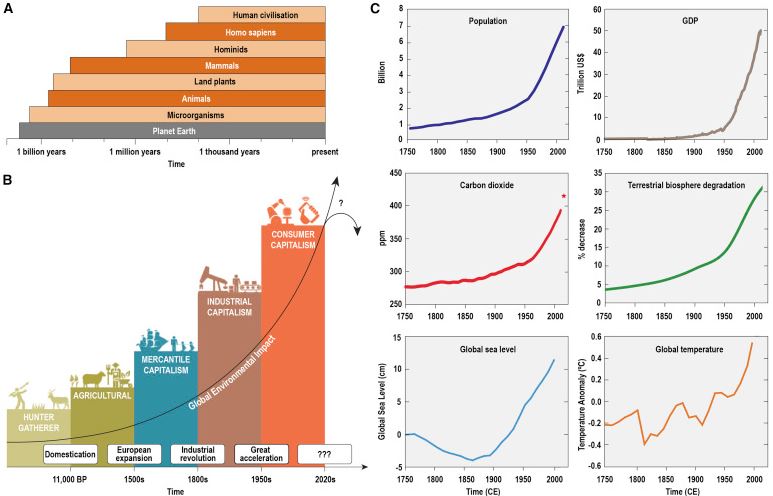
Writing in a Perspectives article published in One Earth, a new environmental and sustainability journal, the authors describe the development of human civilisation and how it has contributed to the “existential crisis” which the world is facing now from climate change.
The increasing frequency of extreme weather events, urban air pollution, and contamination of oceans by plastic waste have dramatically increased awareness that human civilization faces an existential environmental crisis.
The scientists argue that the way humankind views its place on planet Earth is the cause of this crisis and of the reluctance to take meaningful and urgent action.
This view gives humans the right to exploit everything on Earth for their own benefit and a belief that sustainability can be delivered through exploiting nature in a smarter way and controlling it better.
The scientists propose that humankind rejects this view and instead learns to live in harmony with life on Earth by respecting the land, the oceans, and the atmosphere from which everything derives.
Their research shows how knowledge, creativity, and innovation can drive transformation in all sectors of society to enable this new relationship to develop, re-defining sustainability in terms of all life on Earth.
Perhaps the most significant, important, and profound question is when is it legitimate for humans to exploit, harm, and destroy living things and the environment that every species depends upon?
There are many paradoxes to unravel and unpalatable truths to confront, the Hortons say: "The killing of horses or dogs is despised in many Western societies that would nevertheless slaughter millions of cattle, sheep, and pigs."
"We marvel at our natural forests yet harvest great swathes for timber or for releasing land for our own use"
"We identify endangered species and outlaw their killing but do nothing to stop the destruction of their habitats."
"We marvel at the beauty of landscapes but scar the Earth with mines, industrial wastelands, and pollution."
In searching for a new society and a new definition of the good life, perhaps we should begin by looking to other cultures.
There is no better example of such a culture that that of the Navaho, who “were taught to live in harmony with Mother Earth, Father Sky and the many other elements such as man, animals, plants, and insects” and see that “living in harmony with the universe and all living creatures on Earth gives a clean soul.”
Full study here: https://www.cell.com/one-earth/fulltext/S2590-3322(19)30025-9