
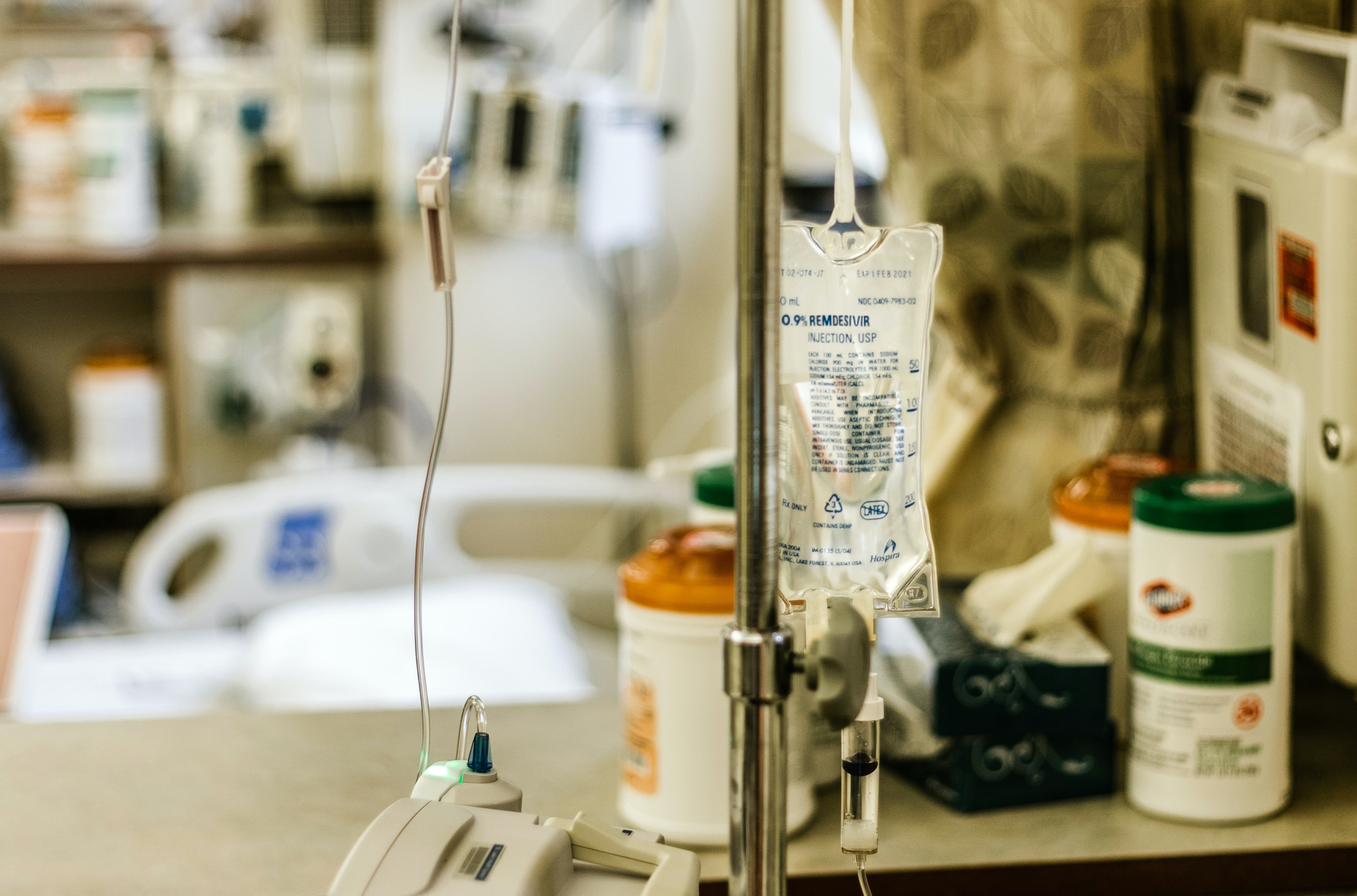
WASHINGTON, April 30 (WNM/Johns Hopkins Center for Health Security) - Several news items regarding the antiviral drug remdesivir were released over the past days.
On Wednesday, Gilead Sciences, the manufacturer of remdesivir, issued a press release that included some results from a Phase III clinical trial comparing the efficacy of 5-day and 10-day treatment courses of the drug (https://www.gilead.com/news-and-press/press-room/press-releases/2020/4/gilead-announces-results-from-phase-3-trial-of-investigational-antiviral-remdesivir-in-patients-with-severe-covid-19). The press release said that patients given the 5-day course had similar time to recovery as those treated with the 10-day course. Gilead also noted that the results “complement” forthcoming results from a placebo-controlled trial conducted by the National Institute for Allergy and Infectious Diseases (NIAID). If 5-day treatment courses have similar efficacy to 10-day courses, it could increase the number of patients able to be treated with the drug; however, the press release did not provide any information regarding whether remdesivir improved patient outcomes compared to a control group—e.g., with respect to the time to recovery or disease severity or mortality. The results of this study have not yet been peer reviewed, but Gilead indicated that it intends to submit them for publication in the near future.
Following the Gilead announcement, NIAID issued a press release regarding the results of the study alluded to by Gilead (https://www.niaid.nih.gov/news-events/nih-clinical-trial-shows-remdesivir-accelerates-recovery-advanced-covid-19). The interim results from the NIAID study—a randomized control trial involving more than 1,000 patients—find that patients treated with remdesivir had a shorter time to recovery than those who received a placebo (median of 11 days compared to 15 days; 28% improvement). Dr. Anthony Fauci described the reduction in time to recovery as “highly significant.” Additionally, the data suggest that remdesivir could also potentially improve survival. The mortality risk was found to be 8% in patients treated with remdesivir, compared to 11% in the control group; however, the results were not statistically significant. The study is ongoing, and the results have not been peer reviewed.
Additionally, another remdesivir study was published in The Lancet (https://www.thelancet.com/journals/lancet/article/PIIS0140-6736(20)31022-9/fulltext). This study, an RCT conducted in China, did not find a statistically significant improvement in patients treated with the antiviral. The median time to clinical improvement in the treatment group was 21 days, compared to 23 days in the control group; however, the results fell short of statistical significance. The mortality risk in both groups were approximately equal—14% in the treatment group, compared to 13% in the control group. This study aimed to recruit 325 patients but was only able to include 237.
Dr. Fauci commented that the NIAID results demonstrate that “remdesivir has a clear-cut, significant, positive effect in diminishing the time to recovery.” The NIAID study suggests that remdesivir could potentially reduce mortality, but additional data is needed to further clarify the drug’s effect from that perspective. Dr. Fauci indicated that the NIAID study’s findings are so striking that there is a “new standard of care” for COVID-19 patients. This is the first data-supported indication for a treatment for COVID-19. In light of the new evidence, the US FDA is expected to issue an Emergency Use Authorization (EUA) for remdesivir.
Gilead has reportedly increased production of remdesivir, from 5,000 treatment courses available in January to more than 50,000 courses available now (https://www.statnews.com/2020/04/30/gileads-remdesivir-has-seen-success-against-the-coronavirus-now-the-company-has-to-make-enough-to-supply-the-world/). Prior to the COVID-19 pandemic, Gilead was “not actively manufacturing” the drug, but now that it has demonstrated some efficacy in treating COVID-19, a significant surge in production will be needed to meet growing global demand. Under its existing timeline, Gilead aims to produce 500,000 treatment courses by October and 1 million by December.