
ALMETYEVSK, June 21 (TASS/Newswires) - Tatneft started receiving claims from European partners in connection with contamination of the Druzhba oil pipeline, chief executive of the oil producer Nail Maganov told reporters on Friday.
“We have already started receiving claims. They are within the reasonable scope, within the framework of our contractual relations. Claim handling is underway,” the top manager said. Maganov did not disclose the damages amount because it is discussed for the time being. Compensation payments are also discussed with Transneft, he added.
Claims of partners pertain to the volume of supplies, rather than to oil quality, President of Tatarstan Rustam Minnikhanov noted in his turn.
The Czech Republic did not find the flow of non-compliant Russian oil pumped through the Druzhba pipeline, the chairperson of the National Office of State Reserves Pavel Shvagr told reporters on Thursday.
“We receive high-quality oil,” he noted. “This was confirmed by the tests, which were carried out on the borders of the republic and the states through which its transit takes place. The inspections passed on the pipeline sections on the Slovak-Ukrainian and Czech-Slovak borders “We constantly check raw materials for compliance with the required standards.”
Russian oil is in compliance with the existing regulations, from the southern branch of the Druzhba pipeline, which runs through Ukraine and Slovakia, entered the Czech Republic on May 27. Raw materials were first directed to the enterprise for its processing to the city of Litvinov
Czech storage tanks have accumulated oil, which, in case of crises with supplies from Russia, will ensure the functioning of the national economy for a maximum of two months. Until the end of this year, reserves should increase by half.
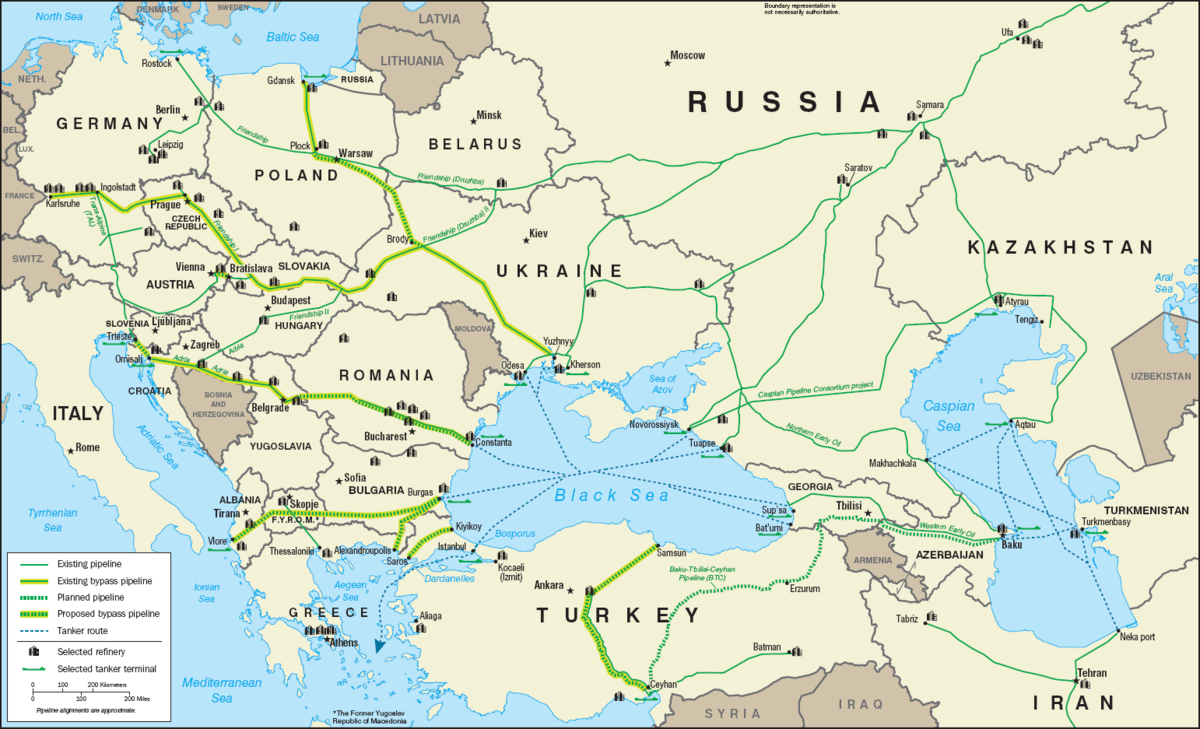
The Druzhba oil pipeline provides supplies of oil to Belarusian refineries and its transit to Europe through Belarus, Poland and Ukraine. In mid-April, Belneftekhim reported a sharp deterioration in the quality of the Russian oil running through the pipeline. As a result, several states stopped receiving and refining the Russian oil. The contaminant source was revealed at the Samara-Unecha section. Transneft said that the Russian oil in the Druzhba pipeline was deliberately contaminated. Russia’s Investigative Committee said that contaminated oil was loaded into the Druzhba oil pipeline in order to conceal multiple oil thefts.
Supplies of on-spec oil to Belarus resumed in early May.
On June 3, the talks on settlement of the issue around supplies of contaminated oil were held in Moscow, after which Russia’s Deputy Energy Minister Pavel Sorokin told reporters that all participants reached a common understanding of the principles for calculation of compensations for supplies of off-spec oil.
Belarus carries out enhanced quality control of oil coming from Russia, and confirms the absence of the excess content of organic chlorides, Belneftekhim announced on Thursday.
“Over the past days, the numerous tests of transit oil in our region showed a lack of excess of organic chlorides in oil. At the same time, the Belarusian side is working openly with the Russian and Polish parties to find out the causes of oil pollution by the Polish operator PERN”,” the company said in a statement published on its website.
Belneftekhim said that the situation with the transportation of oil is under control, its transit to Poland continues. “The concern will continue to draw conclusions only based on the results of tests, and not speculation, and adhere to the principle of reliability of information,” the concern noted.
As the Polish company, operator of the Druzhba PERN (Pern) pipeline, reported on Thursday, it had to stop pumping oil through its section for several hours due to the discovery of excess organic chlorides in the oil content. Now the supplies have resumed. The Polish side asked for clarification from the Gomeltransneft Druzhba.
The Druzhba oil pipeline provides supplies of oil to Belarusian refineries and its transit to Europe through Belarus, Poland and Ukraine.
In mid-April, Belneftekhim reported a sharp deterioration in the quality of the Russian oil running through the pipeline. As a result, several states stopped receiving and refining the Russian oil. The contaminant source was revealed at the Samara-Unecha section. Transneft said that the Russian oil in the Druzhba pipeline was deliberately contaminated. Russia’s Investigative Committee said that contaminated oil was loaded into the Druzhba oil pipeline in order to conceal multiple oil thefts.
Supplies of on-spec oil to Belarus resumed in early May.
On June 3, the talks on settlement of the issue around supplies of contaminated oil were held in Moscow, after which Russia’s Deputy Energy Minister Pavel Sorokin told reporters that all participants reached a common understanding of the principles for calculation of compensations for supplies of off-spec oil.
On Tuesday, June 11, Kommersant business daily wrote with reference to sources that Rosneft had asked Deputy Prime Minister Dmitry Kozak to speed up decision-making regarding compensations for losses of Russian crude producers from contamination of oil with chlorides in the Druzhba oil pipeline. Russia’s top oil producer explained that it had already received claims from Belneftekhim for $155 mln and another $450,000 from Poland’s Orlen.