
WASHINGTON, May 17 (WNM staff/Newswires) - U.S. President Donald Trump on Thursday held back from further escalating tensions with Iran. When asked by a reporter at the White House on Thursday morning about whether the United States was going to war with Iran, Trump replied "I hope not."
William F. Wechsler, the Director for Middle East Programs at the Atlantic Council and Director of the Rafik Hariri Center for the Middle East, told World News Monitor, that with his remarks “Trump in fact played a constructive role in deescalating the conflict”. However, Wechsler in concerned about the power vacuum in the Trump administration. With the Secretary of State not yet confirmed and key people like former Defense Secretary James Mattis and former Secretary of State Rex Tillerson not active any more, “the situation is very dangerous as a military conflict might be triggered out of mistake”, Wechsler says. “There is a lack of understanding of the different structures and the culture, as the U.S. and Iran haven’t had any communication over a long period of time”, Wechsler says.
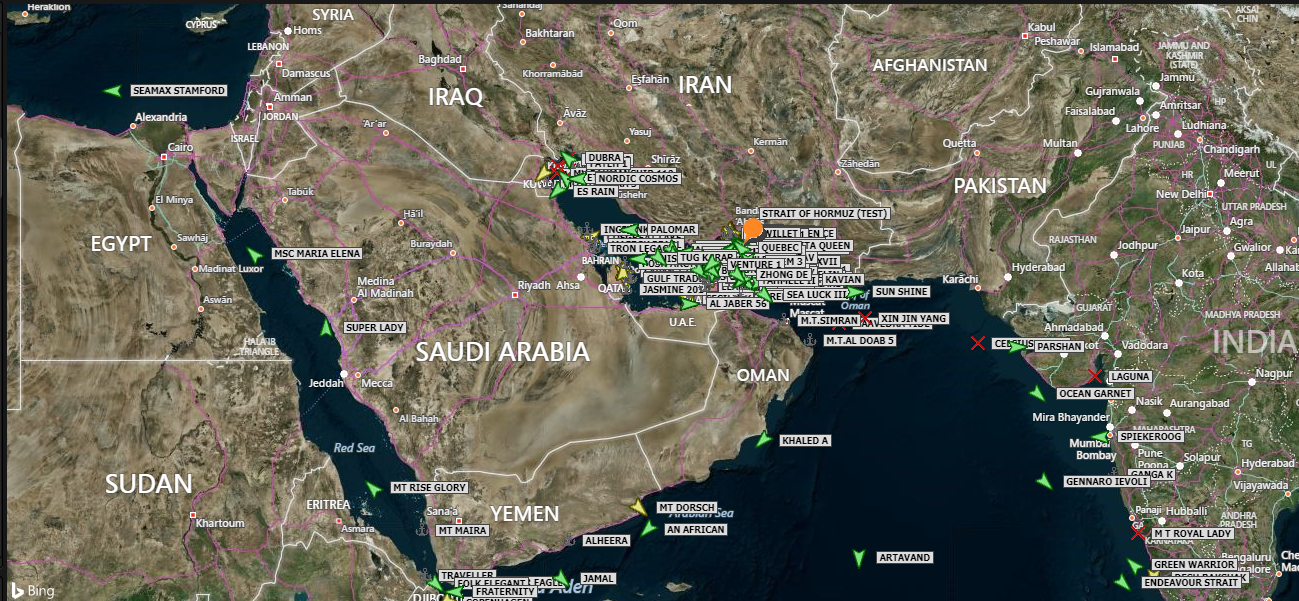
Washington has piled up military pressure on Tehran over the past week by intensifying deployment including an aircraft carrier group to the Middle East following U.S. intelligence information revealing "an escalating of threatening actions" from Iran.
U.S. hawks on Iran, led by National Security Adviser John Bolton, have reportedly advocated to confront Iran while Trump himself has showed restraint on further escalating the situation.
Trump told his acting Defense Secretary Patrick Shanahan on Wednesday that he does not want to go to war with Iran, reported The New York Times on Thursday, citing several anonymous administration officials.
Also on Thursday, Trump met with Swiss Confederation President Ueli Maurer at the White House, whose country acts as a protecting power for the United States in Iran as the diplomatic ties between Washington and Tehran have been cut off decades ago.
Their meeting has been seen by observers as a sign that Trump was likely to seek dialogue with Tehran. Trump and Maurer discussed "a range of international issues" during their talks, including the crises in the Middle East and in Venezuela, according to a White House statement released after the meeting.
However, Iranian Foreign Minister Mohammad Javad Zarif on Thursday called the U.S. government a "bully" trying to force all other countries to do something "illegal," according to Press TV. There is not any prospect of negotiation with the United States, Zarif noted.
This comes as no surprise, Wechsler says: “The U.S. foreign policy of the Trump administration has been very consistent in seeing Iran as a threat.” Bolton has been advocating a tough line towards Iran since he is in politics. “The power vacuum in the US foreign policy cabinet level is not accidental”, Wechsler says. Bolton is said to have worked behind the scenes on creating this vacuum, eliminating individuals who could effectively challenge him and allowing ‘acting’ personnel to serve for unusually long periods in key positions. “In the end however the national security advisor is only as powerful as the strength of his relationship with the president,” Wechsler says, “and with this administration it is very difficult for anyone on the outside to really know the true nature of this critical relationship.”
Over the recent weeks, Washington has ratcheted up pressure against Tehran with a series of sanctions, designations and military threats, following Washington's year-long campaign against Iran after U.S. exit from the landmark Iran nuclear deal in May last year.