
Vienna, 19 September (WNM) - The EU subcommittee of the Austrian parliament on Wednesday voted against the EU-Mercosur free trade agreement with Latin America, as the APA press agency reports. This obliges the government to veto the EU-Mercosur agreement at EU level. The free trade agreement cannot enter into force for the time being, as decisions in the EU Council must be taken unanimously.
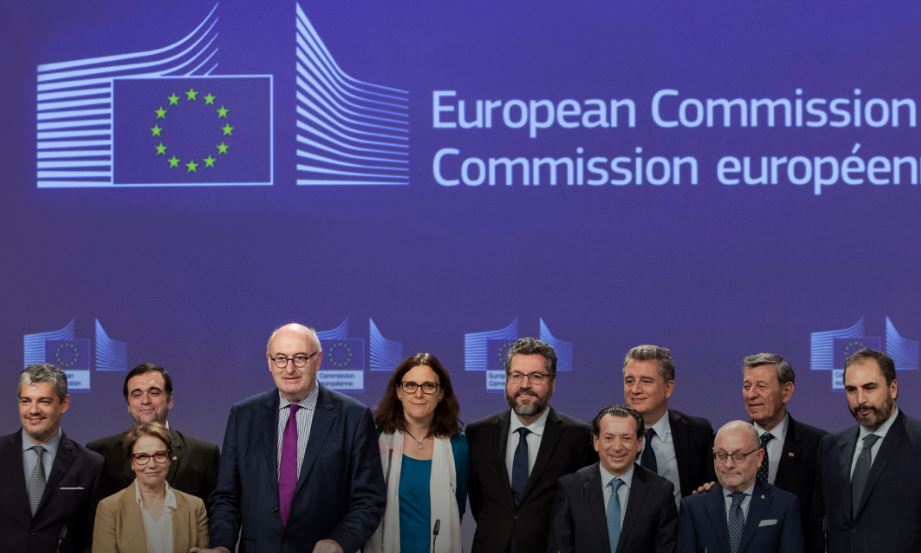
On the signing of the agreement, EU Commission President Jean-Claude Juncker had said that Mercosur was "the EU's biggest deal" and that the EU was proving with the deal that it relied on rule-based cooperation in times of trade disputes.
But the Austrian parliament has now put a stop to this: The votes in the committee came from all parties except the NEOS. The FPÖ and surprisingly also the ÖVP agreed to the proposal of the SPÖ and the list NOW.
Whether the veto really holds is unclear: In Austria new elections will take place on September 29th. The FPÖ had rejected the agreement with Canada (CETA) before the last election, but approved it after the election victory.
In the broad rejection of the agreement there is a rare coalition even between the right-wing FPÖ and the Greens.
FPÖ leader Norbert Hofer thanked the SPÖ and ÖVP for their "cooperation on this important issue", in which "there must be no kneeling before the interests of industry". "The Mercosur Agreement is history", he referred to the unanimity principle for decisions in the Council of the European Union.
Monika Vana, a Green MEP from Austria, described Austria's "no" vote as "pointing the way in Europe": "We now have to exert pressure to ensure that it holds".
Brazil’s President Jair Bolsonaro had classified the agreement as a historic development in EU-Brazilian relations and marked it as “one of the most important trade deals of all time”.
“The Mercosur-EU deal is much more than a trade agreement,” Argentine Foreign Affairs Minister Jorge Faurie had said at the signing ceremony, “It’s a strategic advance in Argentina’s position on the global stage and strengthens the commercial agenda of both our country and our bloc.”
“They have been long negotiations – tough, difficult, and at least I have said many times ‘we are almost there’. Now we are. This is a landmark agreement,” European Commissioner for Trade Cecilia Malmstrom had said, reiterating that the agreement sends a strong message that both the EU and Mercosur are in favour of “open, sustainable and rules-based trade”.
Taking into account the GDP of all the countries concerned, the agreement concluded by the EU in 2018 with Japan is slightly larger (€19.5 trillion) than that with Mercosur (€18 trillion), but in terms of population, the EU-Mercosur agreement is bigger, covering nearly 800 million people, significantly more than the 630 million covered in the EU-Japan deal.
The new EU and Mercosur agreement will see €88 billion worth of goods traded annually. This will help boost exports of EU products including cars, car parts, machinery, chemicals, pharmaceuticals, clothing, and footwear or knitted fabrics.
The EU’s agri-food sector will benefit from slashing the existing high tariffs imposed by Mercosur on EU export products, chocolates and confectionery, wines, spirits, and soft drinks. The agreement will also provide duty-free access to quotas for EU dairy products, most notably for various types of cheese.