
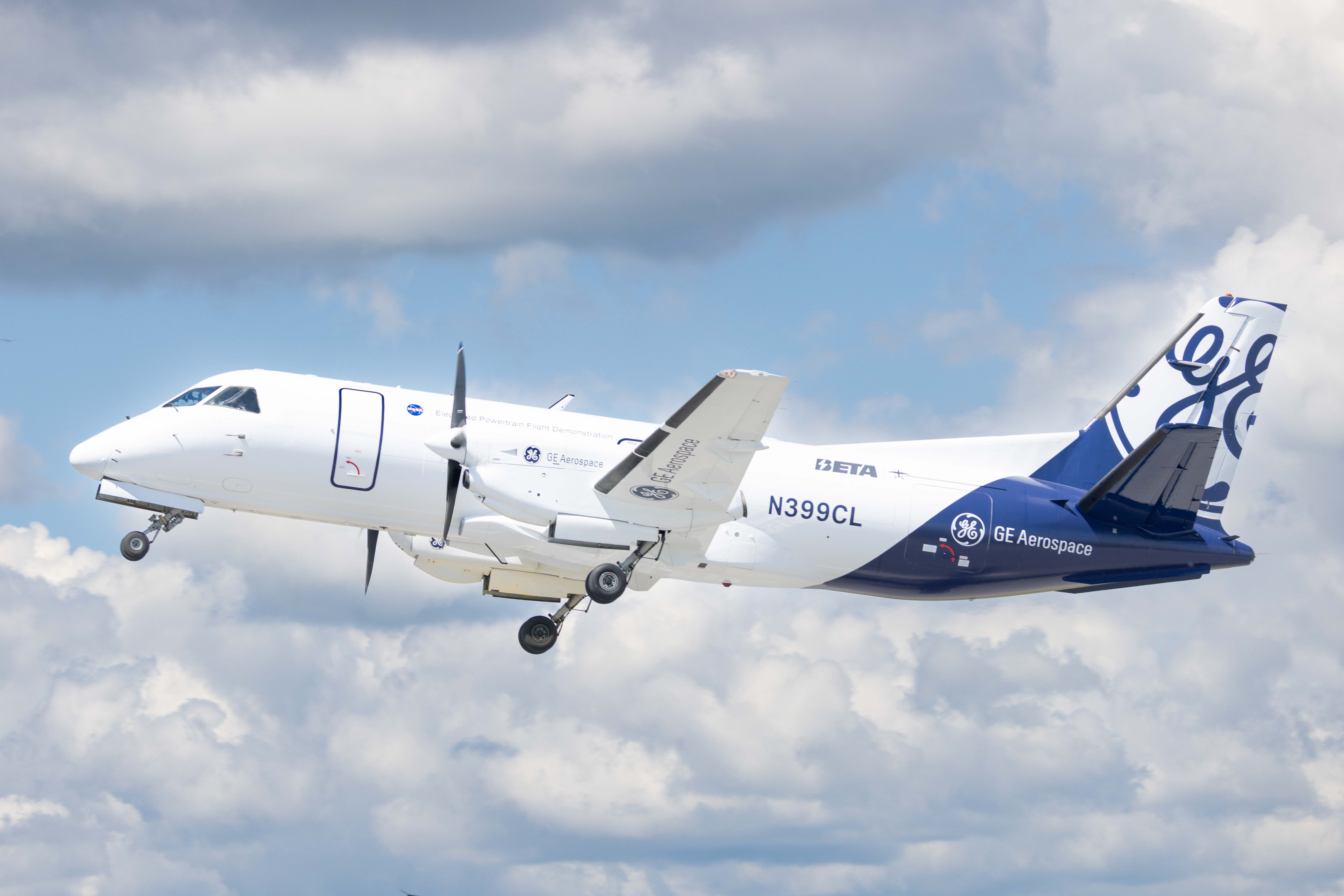
GE Aerospace has achieved a milestone in hybrid-electric aviation by completing a flight above 30,000 feet with a modified aircraft. This marks a significant step forward in bringing electrified propulsion closer to commercial use.
GE Aerospace has reached new heights in hybrid-electric aviation, successfully flying a hybrid-electric aircraft above 30,000 feet. This significant milestone in electrified propulsion was achieved before the Farnborough International Airshow, in partnership with NASA, BETA Technologies, and Boeing, as reported by Interesting Engineering on July 20, 2026. During the demonstration, engineers operated a modified Saab 340B at commercial-altitude levels and maintained the hybrid-electric propulsion system for over two hours in its longest test segment. The testing focused on GE Aerospace's megawatt-class hybrid-electric propulsion system, developed under NASA’s Electrified Powertrain Flight Demonstration program.
This system combines a conventional gas turbine with an electric powertrain to optimize efficiency and performance. H. Lawrence Culp Jr., GE Aerospace Chairman and CEO, described the achievement as a historic moment for the aviation industry, crediting the collaboration with NASA, BETA Technologies, and Boeing for advancing technologies aimed at enhancing aircraft efficiency and range. The unique design of the propulsion system included an inverted nacelle mounted on the Saab 340B, enhancing ventilation for high-power equipment. The system integrates components developed by GE, including electric motors, power converters, and a CT7 turboprop engine, with BAE Systems supplying the batteries and Aurora Flight Sciences designing the nacelle.
Before crossing the Atlantic to the UK, pilots from GE Aerospace and BETA Technologies conducted flight evaluations in the United States. Kyle Clark, BETA Technologies’ CEO, noted the propulsion system's capability in improving climb performance and high-altitude operations, while also serving as an experimental platform for future hybrid aircraft. Aurora Flight Sciences’ Graham Drozeski highlighted the integration of a high-voltage electric propulsion system capable of functioning at commercial cruising altitudes.
This development marks an essential step forward in realizing practical hybrid-electric aircraft. The engineering team has addressed challenges unique to aviation, such as heat management and the need for light, flight-certified electrical hardware. During testing, the electric powertrain was used to drive the propeller and recharge the onboard battery. GE Aerospace began its work under NASA’s EPFD program in 2021. Prior achievements include propulsion tests in NASA’s Electric Aircraft Testbed, which simulated flights at altitudes as high as 45,000 feet. The latest flight supports the CFM International RISE program, which explores advanced propulsion concepts targeting significant fuel burn reductions.
Source: Interesting Engineering