
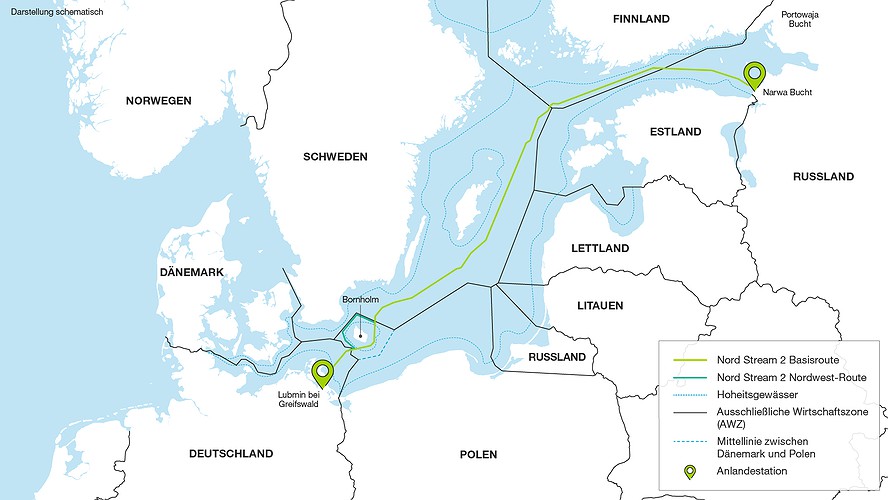
Russia’s top gas producer Gazprom and its European partners are discussing various scenarios of the Nord Stream 2 project’s implementation amid amendments to the Gas Directive being considered in the EU, Chief Executive Officer of the Austrian oil and gas company OMV Rainer Seele told reporters in Moscow, adding though that the project is planned to be completed in due time even taking into consideration that initiative.
“Currently we are only sharing opinions on various scenarios of developments. But we will be able to speak more actively about which actions will be required from our side only when the final text (of the Gas Directive) will be available to us,” he said, according to TASS news agency.
“As of now the estimates say that the project will be completed in due time. The whole political discussion concerning the implementation of the project is not of highest priority for me. We have obtained building permits, and the construction is underway in places for which we obtained them,” Seele noted.
According to CEO, he discussed the issue with Gazprom Chief Executive Officer Alexei Miller at a meeting in Moscow not long ago.
OMV CEO added that for investors “it is not very pleasant that the project’s legal situation is changing.” “And here the question arises how much the directive will work retroactively since all permits that we have obtained are in force on the old legal basis, which means that the issue will be viewed largely from a legal perspective,” he explained.
The revised Gas Directive is to come into force prior to the launch of Nord Stream 2, which is why it will be applicable to the project.
On February 20, the Committee of Permanent Representatives of the EU approved the text of amendments to the EU Gas Directive endorsed on February 12 at technical talks between the European Parliament, the European Commission and the EU Council.
The revised Gas Directive is to extend the norms of the EU’s Third Energy Package to offshore pipelines on the territory of the EU. They contain the requirement that a gas-producing country cannot be the owner of such infrastructure facilities, whereas 50% of the pipeline’s capacity should be reserved for pumping gas from independent suppliers.