
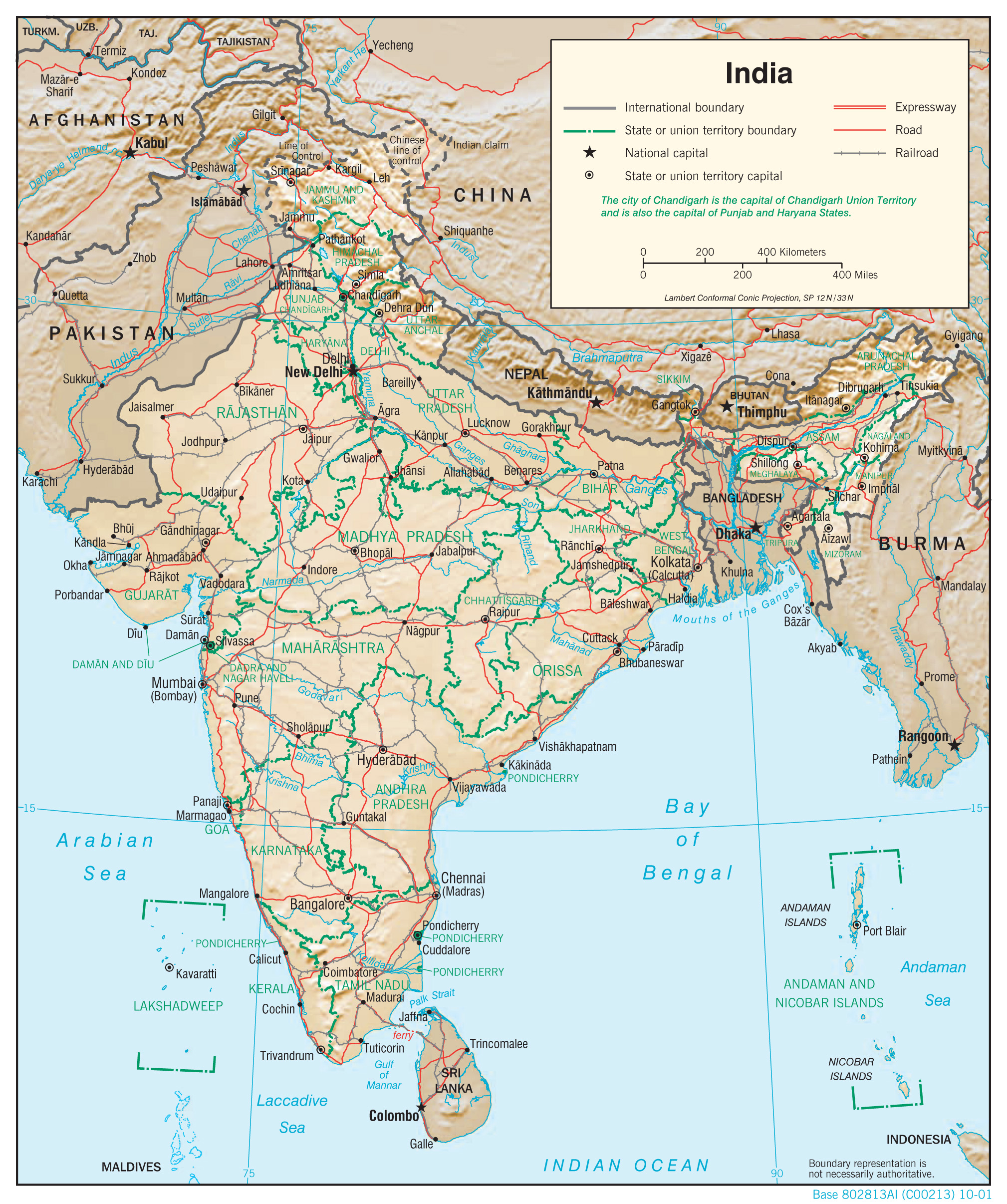
Jammu (India), Aug 5 (EFE/EPA) - The government of India on Monday moved to revoke special constitutional privileges given to the disputed Kashmir region, thereby annulling its semi-autonomous status, and divide the Muslim-majority state into two federally administered regions.
It is feared that the move, ostensibly aimed at fully integrating the restive Himalayan region with the rest of country, will have far-reaching political and social consequences and can trigger unrest in the norther state.
Home Minister Amit Shah announced in the Indian parliament the decision to scrap Article 370, a constitutional provision that accorded special status to Jammu and Kashmir and allowed it to make its own laws.
The announcement was made as large parts of the state were in a complete security lockdown amid apprehensions that any move to abrogate the state’s semi-autonomous status can trigger unrest and public backlash in the state disputed between India and Pakistan.
After a cabinet meeting with Prime Minister Narendra Modi, the home minister told the parliament’s upper house that the “entire constitution” of India “will be applicable to Jammu and Kashmir state”.
According to legal experts, this means that the state’s legislature will have no power to make its own laws, thus ending the status of special powers and autonomy otherwise not applicable to other parts of the country.
“After the president gives assent and it is published in government gazettes, all provisions of Article 370 will cease to be applicable,” Shah said amid a loud uproar in the house with some opposition lawmakers contesting the government’s move.
The minister said the government was planning to divide the state, which shares its boundaries with China and Pakistan, into two separate federally-administered regions.
Ladakh, a sparsely populated region in the state’s east that is renowned for its mountain beauty and culture closely related to that of Tibet, will be a union territory without a legislature, Shah said.
He said the other union territory will be Jammu and Kashmir that will have a legislature but with limited powers and will be essentially ruled by a federally-nominated lieutenant governor.
The step would also mean revocation of a bar on property purchases by people from outside the state. Such plans have in the past provoked warnings of a backlash in Kashmir.
The state’s special constitutional privileges empowered its legislature to define residents and their citizenship rights, including jobs and property.
The leader of opposition in the upper house, Ghulam Nabi Azad, who is from Kashmir and was the state’s chief minister from 2005-08, said the Bharatiya Janata Party-led government has committed a “murder of democracy”.
“The BJP government, drunk on power and to garner votes... has dismembered Jammu and Kashmir,” said Azad, one of the top leaders of the Indian National Congress.
Azad’s party colleague P. Chidamabaram, a former home minister, said what the BJP has “done is a constitutional monstrosity”.
Politicians in Kashmir reacted even more sharply to the government’s “unilateral” move even as almost all of them have been detained in their houses in Srinagar, the summer capital of Kashmir, amid complete restrictions on movement and snapping of internet and telephone connectivity.
“Today marks the darkest day in Indian democracy. Decision of Jammu and Kashmir’s leadership to reject two nation theory in 1947 and align with India has backfired. Unilateral decision of (the government of India) to scrap Article 370 is illegal and unconstitutional which will make India an occupational force in Jammu and Kashmir,” former chief minister Mehbooba Mufti said.
“It will have catastrophic consequences for the subcontinent. (The government’s) intentions are clear. They want the territory of Jammu and Kashmir by terrorizing it’s people. India has failed Kashmir in keeping its promises,” said Mufti, who until last year was heading the coalition government with Modi’s Bharatiya Janata Party in the state.
Mufti’s predecessor Omar Abdullah said the government’s “unilateral and shocking decisions are a total betrayal of the trust that the people of Jammu and Kashmir had reposed in India when the state acceded to it in 1947” at the time of the subcontinent’s partition on religious lines after India and Pakistan won their freedom from the British rule.
The government’s announcement came after days of speculations in Kashmir that the government was planning to scrap the sensitive constitutional privileges.
Earlier on Sunday midnight, the authorities threw the state into a strict security lockdown and snapped internet and telephone services and placed politicians under house arrest.
Days before the announcement, the government ordered tourists and outside students in the valley to go back home “as soon as possible”. The unprecedented order came amid the deployment of thousands of more paramilitary forces in one the heaviest militarized zones in the world.
The authorities claimed the move to make security arrangements and ask outsiders to leave was due to reports of terrorist threats.
Kashmir has been a disputed region since 1947 when India and Pakistan won their freedom from British rule. The two countries, which have fought three wars, including two over Kashmir, claim the divided territory in its entirety.
The state has been battling an armed rebellion against Indian rule since 1989. Over 70,000 people have been killed the three decades of the bloody conflict, according to activists.